
Anxiety Counselling Singapore: Compassionate, Evidence-Based Therapy for Lasting Calm
Anxiety can be exhausting when your mind never seems to switch off. You may find yourself overthinking conversations, worrying about what might go wrong, expecting the worst or feeling on edge even when everything appears to be fine. Perhaps you have tried to manage the worry yourself, but it keeps returning — affecting your sleep, relationships, work or ability to enjoy the life around you.
At Emotional Wellness Counselling Singapore, Ms. Carol Goh provides compassionate, evidence-based anxiety counselling and psychotherapy, drawing on more than 20 years of clinical experience. We offer a safe, confidential space to understand what may be contributing to your anxiety, process deep-rooted emotional difficulties and develop greater clarity, confidence and calm.
- 20+ Years of Clinical Experience
- 2,000+ Counselling Cases
- 97% 5-star Google reviews
- In-Person Near Orchard & Online Sessions
- English & Mandarin
- A quieter mind
- Greater emotional freedom
- More confidence in moving forward

"I’m truly grateful to have met Carol. From our very first session, I felt heard, hopeful, and deeply supported." — Verified Google Review
Anxiety Therapy at a Glance
| Topic | Overview |
|---|---|
Who we help | Individuals whose anxiety is affecting their daily life, relationships, work or emotional well-being, whether they are dealing with persistent worry, panic, emotional overwhelm or difficulty coping with stress |
What counselling can address | Understanding and addressing the fears, emotional cycles and experiences contributing to anxiety. |
Therapeutic approaches | Blending counselling and psychotherapy using EMDR, Schema Therapy and Gestalt Therapy where clinically appropriate |
Common concerns addressed | Generalised anxiety and chronic worrying, panic attacks, social anxiety, health anxiety, work-related anxiety, relationship distress and anxiety following difficult life experiences |
What may you work towards? | Greater clarity, emotional control, confidence and resilience |
What Is Anxiety Counselling?
Anxiety counselling is a confidential and collaborative process that helps you understand how anxiety affects your thoughts, emotions and daily life. It provides a safe space to explore recurring patterns, fears and concerns that may be contributing to anxiety.
You do not need to know exactly why you feel anxious before starting therapy. Together, you and your counsellor can make sense of your experiences, address patterns contributing to your anxiety, and develop greater clarity, emotional confidence and control.
Who Can Benefit from Anxiety Counselling
Anxiety counselling may be helpful for individuals who feel that anxiety is becoming difficult to navigate alone, even if they are unsure whether their experiences would be considered a specific anxiety disorder. You may benefit from counselling if you:
- Feel stuck in recurring worry or fear and find that reassurance or trying to think things through has not brought lasting relief.
- Find yourself reacting more strongly than you would like to situations involving uncertainty, pressure, relationships or perceived threats, and want to better understand your reactions.
- Notice patterns that keep repeating across different situations, such as needing certainty, expecting negative outcomes, avoiding situations or finding it difficult to trust your own judgement.
- Want to understand yourself more deeply, rather than focusing only on ways to manage anxious feelings in the moment.
- Have experienced difficult or emotionally significant events that you feel may still influence how you respond to situations today, and would like to explore this connection at your own pace.
- Are going through ongoing life pressures or changes and want support in making sense of your emotions and responding with greater clarity and confidence.
You do not need to have a formal diagnosis, know the exact cause of your anxiety, or have reached a crisis point before seeking counselling. The first step can simply be having a confidential conversation about what you are experiencing and whether therapy may be appropriate for you.
Common Anxiety Concerns We Help With
Anxiety can take many forms and may affect thoughts, emotions, behaviour, relationships or everyday functioning. We provide counselling for a range of anxiety-related concerns, including:
- Generalised anxiety and chronic worrying – Persistent worry that feels difficult to control.
- Panic attacks – Sudden episodes of intense fear accompanied by distressing physical symptoms.
- Social anxiety – Fear of being judged, criticised or embarrassed in social situations.
- Health anxiety – Ongoing worries about your health despite medical reassurance.
- Work-related anxiety – Anxiety linked to workplace stress, high expectations or performance pressures.
- Relationship anxiety – Fear of rejection, conflict, abandonment or difficulty trusting others.
- Anxiety after difficult life experiences – Anxiety associated with trauma, prolonged stress, loss or major life changes.

When to Consider Professional Support
Anxiety can affect people in different ways. You may want to consider professional support when these experiences become difficult to manage on your own or start influencing how you live, work or relate to others.
You may benefit from exploring counselling if you experience:
- Persistent overthinking or worry that is difficult to switch off, even when you know there may be little reason for concern.
- Sleep difficulties because your mind remains active or you find it difficult to settle at night.
- Difficulty concentrating or staying present, particularly when anxious thoughts repeatedly draw your attention elsewhere.
- Panic or intense fear that feels difficult to understand, control or work through.
- A tendency to avoid situations or change your usual choices because of anticipated worry, discomfort or fear.
- Recurring anxiety that keeps returning despite your efforts to manage it, leaving you unsure how to move forward.
Professional support can also be worth considering when you want to understand what may be contributing to your anxiety rather than simply finding ways to cope with each episode as it arises.
You do not need to have a formal diagnosis or wait until anxiety becomes overwhelming before reaching out. A confidential first consultation can help you discuss what you are experiencing and explore whether counselling may be appropriate for you.
How Anxiety Counselling Can Help
Anxiety counselling is not only about reducing anxious feelings in the moment. It can help you develop a different relationship with your thoughts, emotions and everyday challenges, so that anxiety has less influence over the way you live.
Through counselling, you may work towards:
Breaking free from repetitive worry
Develop greater awareness of when your mind becomes caught in cycles of worrying, so you can respond with more choice instead of automatically following every anxious thought.
Responding to uncertainty with greater confidence
Build a greater ability to face situations that cannot be completely predicted or controlled without always needing reassurance or certainty before moving forward.
Regaining a sense of control in everyday life
Become less driven by fear and anxiety when making decisions, handling challenges or navigating situations that previously felt overwhelming.
Building greater emotional resilience
Develop a stronger capacity to work through difficult emotions and recover from stressful situations without feeling that anxiety has taken over.
Improving how you relate to yourself and others
Gain greater awareness of how anxiety may influence your reactions, boundaries, communication or relationships, creating opportunities for healthier ways of responding.
Move forward with greater clarity and freedom
With greater understanding and emotional stability, make choices based more on what matters to you rather than what anxiety tells you to avoid or fear.
The goal is not to eliminate every anxious feeling. Rather, counselling can help you understand and respond to anxiety differently, so you can have greater freedom in how you think, feel and live.
Before & After: Changes in Thought Patterns
Anxiety can shape the way you interpret situations, making potential threats feel more immediate or overwhelming than they may be. At Emotional Wellness Counselling Singapore, therapy looks beyond changing negative thoughts to understanding the fears, beliefs and emotional patterns behind them, helping you respond with greater clarity and choice.
- Before Therapy
“Something bad is going to happen.”
With Progress Through Therapy“I can recognise when my mind is anticipating danger and consider what is actually happening.”
- Before Therapy
“I need to be certain before I can feel safe.”
With Progress Through Therapy“I can tolerate some uncertainty without assuming the worst.”
- Before Therapy
“If I make a mistake, everything will go wrong.”
With Progress Through Therapy“A mistake may be uncomfortable, but it does not necessarily mean something terrible will happen.”
- Before Therapy
“I can't handle this feeling.”
With Progress Through Therapy“This feeling is difficult, but I can understand what is triggering it and work through it.”
- Before Therapy
“What if something goes wrong?”
With Progress Through Therapy“I can consider what is within my control instead of repeatedly imagining every possible outcome.”
Our Approach to Anxiety Therapy
At Emotional Wellness Counselling Singapore, we take an integrative approach to anxiety therapy that looks beyond managing symptoms in the moment. We explore your current concerns, emotional patterns, beliefs, experiences and circumstances to understand what may be contributing to your anxiety.
Depending on your concerns and therapeutic goals, counselling may incorporate psychotherapy approaches such as EMDR, Schema Therapy, Gestalt Therapy and CBT where clinically appropriate. The approach is adapted to your needs rather than following a fixed programme.
Understanding What May Be Driving Your Anxiety
Therapy may explore the fears, beliefs, past experiences, relationship dynamics or current pressures that influence how you think, feel and respond. Where relevant, understanding these patterns can help you work through the emotional challenges that continue to affect you.
Working Through What Is Keeping Anxiety Going
Once the contributing factors are clearer, therapy focuses on addressing the issues connected to your anxiety rather than only managing each episode as it occurs. Where past experiences continue to carry emotional weight, therapy may also help you process them and develop a greater sense of understanding and freedom in the present.
Integrative Therapy Based on Your Needs
Depending on your concerns and therapeutic goals, counselling may incorporate psychotherapy approaches such as EMDR, Schema Therapy, Gestalt Therapy and CBT where clinically appropriate. These approaches are selected according to your needs rather than applied as a fixed programme, and the therapeutic focus can evolve as your understanding and progress develop.
Your Anxiety Counselling Journey
Starting counselling can feel uncertain, especially if you have been struggling with anxiety for some time or are unsure where to begin. You do not need to have everything figured out before your first session. Therapy begins by understanding what you are experiencing and identifying what you would like to change.
Your counselling journey may involve:
1. Understanding Your Anxiety
You and your counsellor explore your current concerns, how anxiety is affecting your daily life, and what you hope to achieve through therapy. This provides a clear starting point for your counselling.
2. Exploring What May Be Contributing
Together, you may explore the fears, beliefs, experiences, current pressures or other factors connected to your anxiety. The aim is to understand what may be keeping the difficulties going rather than assuming there is one single cause.
3. Addressing the Underlying Difficulties
With a clearer understanding of your concerns, therapy focuses on addressing the emotional responses, beliefs and experiences contributing to your anxiety. Depending on your needs, approaches such as EMDR, Schema Therapy, Gestalt Therapy or CBT may be incorporated where clinically appropriate.
4. Reviewing Progress and Moving Forward
As therapy progresses, you and your counsellor review what has changed, identify any areas that may still need attention, and consolidate your progress. The focus is on helping you carry these changes into everyday life with greater clarity, confidence and choice.
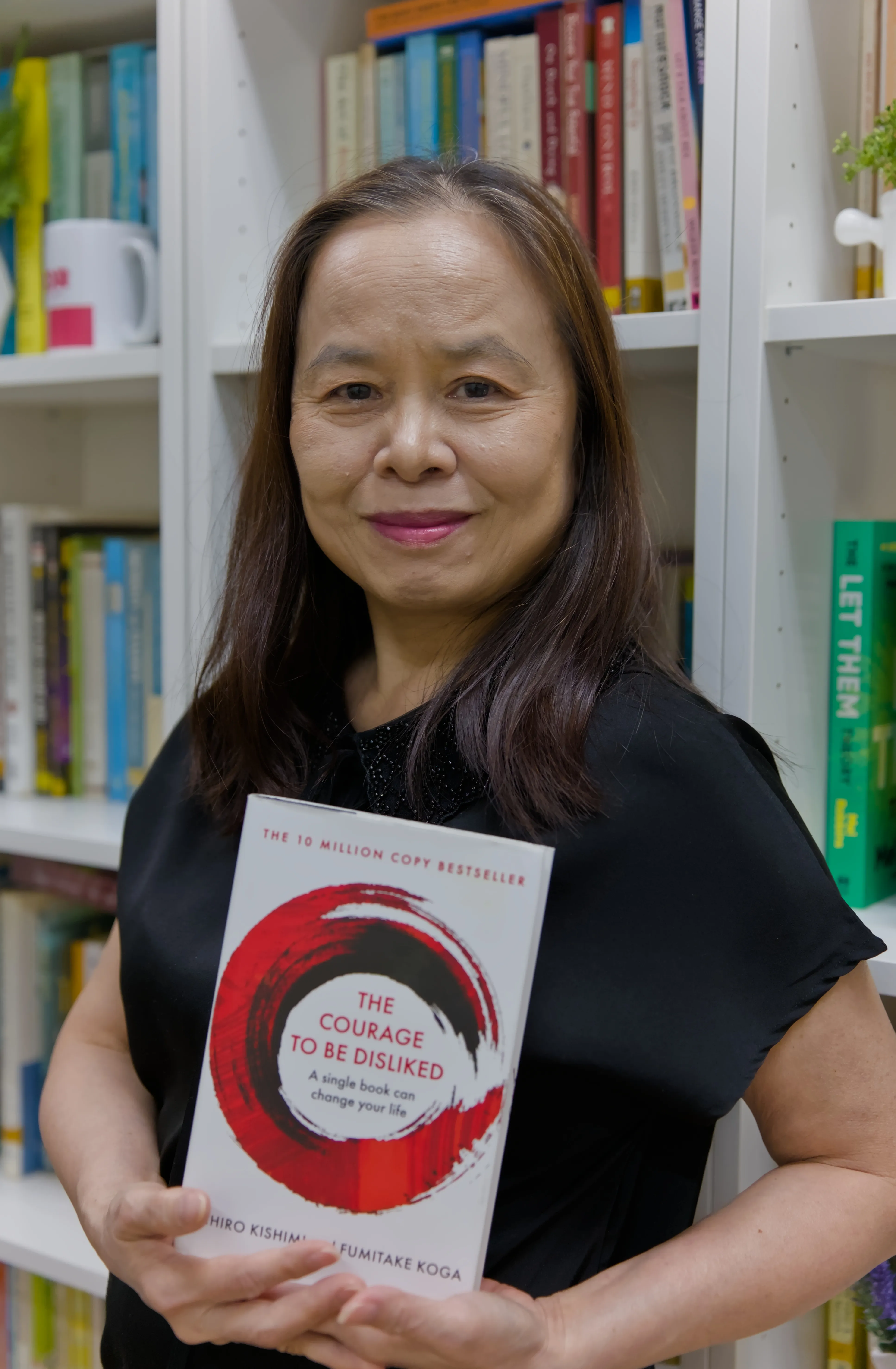
Meet Your Anxiety Counsellor, Carol Goh
Opening up about persistent anxiety, overthinking, or emotional overwhelm takes courage. Having an experienced therapist who listens deeply and understands the subtle complexities of anxiety can make that first step feel safe and manageable.
Ms. Carol Goh is an experienced counsellor and psychotherapist in Singapore holding a Master of Social Science, with over 20 years of clinical experience and more than 2,000 cases managed. Carol specialises in helping individuals process persistent worry, relationship distress, panic, and anxiety linked to unresolved life events. Her clinical experience allows therapy to look beyond the symptoms you are experiencing and consider the emotional patterns, fears and experiences that may be contributing to them.
- Qualifications & Master’s Degree: Master of Social Science with extensive specialized training in evidence-based therapeutic modalities.
- Founding Leadership: Founding member of the EMDR Association of Singapore.
- Multilingual & Flexible Practice: In-person sessions near Orchard MRT and secure online counselling across Singapore in English and Mandarin.
Learn more about Carol Goh and read her full biography on our About Us page.
What Clients Say About Our Counselling
- "Within the first few sessions, she was able to identify the root cause of my anxiety, and for once, I felt a sense of hope again. Through her expertise in EMDR paired with other psychotherapy techniques, I felt so much relief and in just 1-2 sessions, I was able to gain control of my debilitating anxiety and even eat foods I never thought I could."Verified Google Review
- "I was hesitant during our first session but I soon came to realize that I am in a safe and non-judgmental space where I can be honest about myself and my struggles. Carol is extremely thorough and listened emphatically and sincerely. I truly felt heard and understood every step of the way."Verified Google Review
- "Therapy with Carol has made such a huge impact to my life. I’ve gained self-confidence, a newfound acceptance and love for myself, and am now living a much happier and joyful life."Verified Google Review
Related Counselling Services
Anxiety can sometimes be connected with relationship difficulties, past experiences or other emotional concerns. Depending on what you are experiencing, another counselling service may also be relevant:


If you are unsure which service best fits your situation, you can discuss your concerns during a confidential consultation and explore the most appropriate starting point.
Frequently Asked Questions About Anxiety Therapy
What if I don't know why I feel anxious?”
You do not need to know the cause of your anxiety before starting counselling. The first sessions can help you make sense of what you are experiencing, understand what may be contributing to it and decide together what kind of therapeutic support would be most appropriate.
What happens during your first session?
Your first session focuses on exploring your concerns, relevant history and what you hope to achieve through counselling. It is also an opportunity to discuss how therapy may be approached based on your situation.
What therapy approaches do you use for anxiety?
Our therapy combines counselling with psychotherapy approaches such as EMDR, Schema Therapy, Gestalt Therapy and CBT, where clinically suitable. The approach is selected according to your concerns, circumstances and therapeutic goals rather than following a fixed protocol. The focus may range from managing current anxiety to addressing experiences or emotional habits that continue to affect you.
Can therapy help with overthinking?
Yes, therapy helps by exploring the underlying fears, beliefs, and emotional patterns that drive a mind to keep returning to persistent worries, rather than just teaching you how to stop the thoughts in the moment.
Can childhood experiences contribute to anxiety?
Yes. For some individuals, childhood experiences such as inconsistent caregiving, criticism, bullying, emotional neglect or traumatic events can influence how they respond to stress later in life. However, not everyone with anxiety has experienced childhood difficulties, and anxiety can arise from many different factors. Where relevant, counselling can explore how past experiences may relate to current struggles.
What is the difference between stress and anxiety?
Stress is typically a response to an identifiable challenge or pressure, such as work demands, financial concerns or major life changes. Anxiety, on the other hand, involves persistent feelings of worry, fear or unease that may continue even after the stressful situation has passed or when there is no immediate threat. If anxiety becomes overwhelming or begins to interfere with daily life, professional counselling can help you understand and manage it more effectively.
Can anxiety be treated without medication?
Counselling can be used without medication, depending on your individual circumstances. If your symptoms suggest that medical assessment may also be helpful, you may be encouraged to consult a doctor or psychiatrist.
How many therapy sessions will I need?
There is no fixed number of sessions because every person's experience of anxiety is different. The duration of counselling depends on factors such as the nature of your concerns, your therapeutic goals and your progress throughout the counselling process.
Why choose Emotional Wellness Counselling Singapore for your care?
Emotional Wellness Counselling Singapore takes an integrative approach to anxiety counselling, focusing not only on managing anxious feelings but also on understanding the fears, emotional patterns and experiences that may be contributing to them. Where clinically appropriate, therapy may incorporate EMDR, Schema Therapy and Gestalt Therapy according to your concerns and therapeutic goals. With Ms. Carol Goh's 20+ years of clinical experience and more than 2,000 cases managed, you can receive experienced, individualised care in a confidential setting, either in person near Orchard MRT or online in English or Mandarin.
Related Articles

Anxiety Attack vs Panic Attack: What Is the Difference?
They share overlap, but differ in intensity, duration, and triggers. Learn the clinical differences, symptoms, and how counselling and psychotherapy help in Singapore.
Read article
Understanding and Defeating Body Dysmorphic Disorder (BDD)
What BDD is, common signs, why it happens, and how evidence-based psychotherapy (Schema, EMDR, Gestalt) helps—plus where to get support in Singapore.
Read article
Conquer Anxiety Problems With Counselling In Singapore
Understand anxiety types, symptoms, causes, and evidence-based treatments (EMDR, Schema, CBT, mindfulness)—and how counselling in Singapore can help.
Read article
Overcoming OCD through Psychotherapy
What OCD looks like, why it persists, and evidence-based therapies (ERP, CBT, EMDR, mindfulness) that help you break the cycle.
Read article
More Than Just Shyness: Social Anxiety & How To Overcome It
What social anxiety is, why it happens, common symptoms, and how evidence-based psychotherapy helps—plus practical next steps in Singapore.
Read article
Stress Counselling in Singapore: Signs, Causes, and How Therapy Helps
What stress looks like, when to seek help, and how counselling and psychotherapy (CBT, EMDR, Schema Therapy) reduce anxiety, burnout, sleep issues, and irritability.
Read article